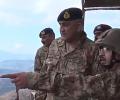
'The Pakistani military has encouraged and supported terrorist organisations, especially in Kashmir, as a means of waging proxy war against the Indian military and the country's superior economic resources.' 'The evidence is irrefutable with the recent killing of 46 paramilitary troops being just the latest example.'

High voter turnout was recorded in the assembly polls in Assam and West Bengal where an estimated 82.02 per cent and 79.51 per cent of the voters cast their ballots till 5 pm.

Rediff.com presents a selection of the year's most enduring moments year from around the world

'No right thinking student of politics can name one state where the BJP gains in double digits.'
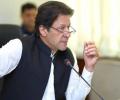
If he doesn't, two things are guaranteed: Failure for him, and continued slide for his nation despite its talented people, strong nationalism, the gift of geography and a formidable army, points out Shekhar Gupta.

The world is still figuring out the man as he continues his enigmatic journey towards the first 100 days of his presidency.

Everything about ISIS had indicated that this would be a violent Ramzan. A violent, divisive Ramzan sends out exactly the message that ISIS wants to send to religious Muslims outside its folds: It plays on their faith and fears, says writer Tabish Khair.
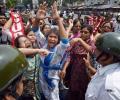
Ten trade unions with a combined membership of 15 crore workers in public and private sector, including banks and insurance companies, are on a nationwide strike to protest against changes in the labour laws.

'America's withdrawal from Vietnam was an inspiring moment for all of us. We believed that it was a glorious victory of ideology and spirit and as historic as the defeat of the Nazis exactly 30 years ago,' remembers Kumar Ketkar 40 years after the end of the Vietnam War.

How will the Modi Sarkar's likely return affect other nations?
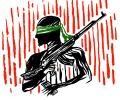
'It is important to destroy, to undermine, to debunk the narrative of ISIS,' Olivier Roy -- one of the world's leading experts on radical Islam -- tells Rediff.com's Vaihayasi Pande Daniel in an exclusive interview.

The Sochi Winter Olympics are meant to be Vladimir Putin's crowning achievement as Russian leader but are in danger of becoming a symbol of his country's problems.

Opposition parties ask the government to listen to the concern of the intellectuals returning awards.

'We were expecting death sentences, but now the court has acquitted them, despite Aseemanand himself admitting to his crime in front of a judge.' More importantly, it seems the tag of 'Hindu Terror' coined by the United Progressive Alliance government was wrong all along. Amjedullah Khan, spokesperson for the Majlis Bachao Tehreek, has been tracking the Mecca Masjid blast case from day one and was also involved in securing the release of more than 100 Muslims youths who were falsely accused in different terror cases in the aftermath of the blast. He spoke to Syed Firdaus Ashraf/Rediff.com about the acquittal of Swami Aseemanand and what it means.

With only one day left, the Winter session of Parliament is on the verge of a washout as it failed to transact any business again on Thursday.

Here's a glimpse of all that happened around the world last week, in 14 images

The deadline given by the Haryana police to controversial 'godman' Rampal to surrender and his followers to vacate his ashram has ended. Police said that water and electricity connection to the ashram have been cut off.

Drones may have been used for non-lethal purposes but state-sponsored assassinations and semi-covert wars are fuelling their boom and not scientific missions or creative activists, says American political activist Medea Benjamin.

The prime minister, says Ram Kelkar, could do a lot to advance his stature as a national leader by speaking in strong and unequivocal terms on the subject of opposing intolerance and emphasizing the rule of law, thereby setting the tone for the nation and the party.

In the year since Modi cast the spotlight on Pakistan's human rights violations in Balochistan, India has not done much more than raise the issue at the UN a few times.

There are moments at the Olympic Games that have a sporting significance, and then there are those that leave an indelible mark on humanity.

Barring Maharashtra, the poll percentage in rest of the states was in excess of 60 per cent while in Puducherry it was 80.47 per cent.

'The year in pictures' treks across the globe, looking back on the moments that shaped 2016. From the United States presidential race, to demonetisation in India to the refugee crisis, the news has kept pouring in. Here are our top 50 moments from the world.

Sandhya Ravishankar describes the thorny relationship between the two political titans of Tamil Nadu, M Karunanidhi and J Jayalalithaa, both now part of the ages.

This time however, the poll panel did not share the overall polling percentage at its briefing.
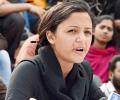
'When you come to Delhi, you see that there are many Kashmirs here -- the Dalits, Muslims, women, bonded labourers.'

'Tying somebody to the jeep is not the military way, but the officer was able to come out of the situation without any bloodshed.' 'I am not supporting him, but I am also not criticising him.' 'He had to use some mechanism to save the uniformed personnel, many of whom were Kashmiri boys of the J&K police,' points out Lieutenant General D B Shekatkar (retd), who was instrumental in the surrender of a record 1,267 terrorists in Kashmir.

Global working conditions have worsened in 2014.

The MEA insists that as far as the government is concerned the hostages are alive. But the families have grown tired of these assurances. They are clueless and so it seems is the government. Rashme Sehgal reports.

'No one talks about the Mumbai riots anymore, though like Delhi 1984, the guilty have not been punished. In Gujarat, many powerful leaders of the state's ruling party are in jail for their role in the riots... In Mumbai, only one politician of the Shiv Sena, a former MP, was convicted of hate speech, along with two other Shiv Sainiks, one of whom was a corporator and the other a junior functionary... So why the apathy? Could it be because despite these statistics and the widely-publicised findings of the Srikrishna Commission, what remained in public consciousness was the violence by the Muslims, thanks to a highly efficient Sena propaganda machine? There's no demand for it, but would an SIT probe into the closed cases of the Mumbai riots help today?' The fadeout of Mumbai's riots from public debate can be called a triumph of the communal State, argues Jyoti Punwani.
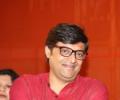
For Arnab Goswami, the television studio is a stage and he plays his part to the hilt, with a finger on the pulse of the English-speaking audience, says Veenu Sandhu

'Patel was more in tune with the popular mood than Jawaharlal Nehru. While the principle that Hindus and Muslims should be able to live together remained central to Nehru's vision for India, the Sardar was less sentimental.' 'Nehru would angrily face down mobs himself, rushing from trouble spot to trouble spot. A veritable tent city, filled with Muslim refugees, sprouted on the lawns of his bungalow... Mountbatten feared Nehru's impulsiveness would get him killed, and assigned soldiers to watch over him.' Nisid Hajari's Midnight's Furies: The Deadly Legacy of India's Partition casts fresh light on the events and personalities behind the horrific division of the subcontinent which haunts the India and Pakistan to this day.

'If you say I won't talk to them at all, does terrorism stop?' 'Even if they say they will give up terrorism, "I will fight terrorism along with you," but even then you say I still won't talk to you until you do the following things, then that is a political call.'

Anurag Kashyap explains why he is finally releasing his long delayed film, Ugly.

'India should think big: About how in a multi-polar world, India can indeed be one of the poles, rather than being a secondary power that has to worry about 'alignment' with one of the poles. A G3 in other words, India should look to getting others to align with itself rather than the US or China,' says Rajeev Srinivasan.
